


We finally did the hive cut out and transfer of our first bee hive. It took a while for things to fall into place. We originally wanted to keep them on our roof, which was not recommended in the end because of difficulty of getting honey up and down the ladder (because a half size hive box when filled with honey is 45 lbs). Then when we went to move them, we discovered they swarmed just hours before we were supposed to do the job! I've never seen a swarm before this, and it was a crazy thing to have thousands of bees buzzing above our house loudly as they tried to find a new home. We lost about 1/3-1/2 of the hive, which meant the worker bees left behind had to make a new queen (and we saw her cell when we did the transfer...a peanut shaped comb on the edge). But in the end, someone offered our mentor a public piece of land in Manhattan Beach to keep her bees and she's allowing us to keep ours beside hers, so it worked out perfectly. They are still close to home to visit weekly, but are out of the way of people traffic.
This was probably one of the coolest things we've ever been a part of. We learned how to recognize the different purposes of their comb: the brood comb, drone comb, honey comb, bee bread (what they feed the larvae), nectar storage, and queen cells. It's one thing to read about it, and it's another to interact and witness it. We even saw a drone emerging from one of the cells, eating his way out as we moved him into the new hive. It was this moment that felt like we were part of a National Geographic segment. We found a capped queen cell, which means they were probably preparing to swarm again, so hopefully they will adjust nicely in their new home and stay since we moved them soon enough.
They seem to be very docile bees. We didn't get stung at all, and not very many died in the process of transferring them, which I was really happy about. We are hoping that in about a year we'll get our first batch of honey. We will only take what is excess, so it'll be a while before they've made more than they need. In the mean time, we will keep them happy, and protected from ants!
Here are some video clips from the process of the cut out:
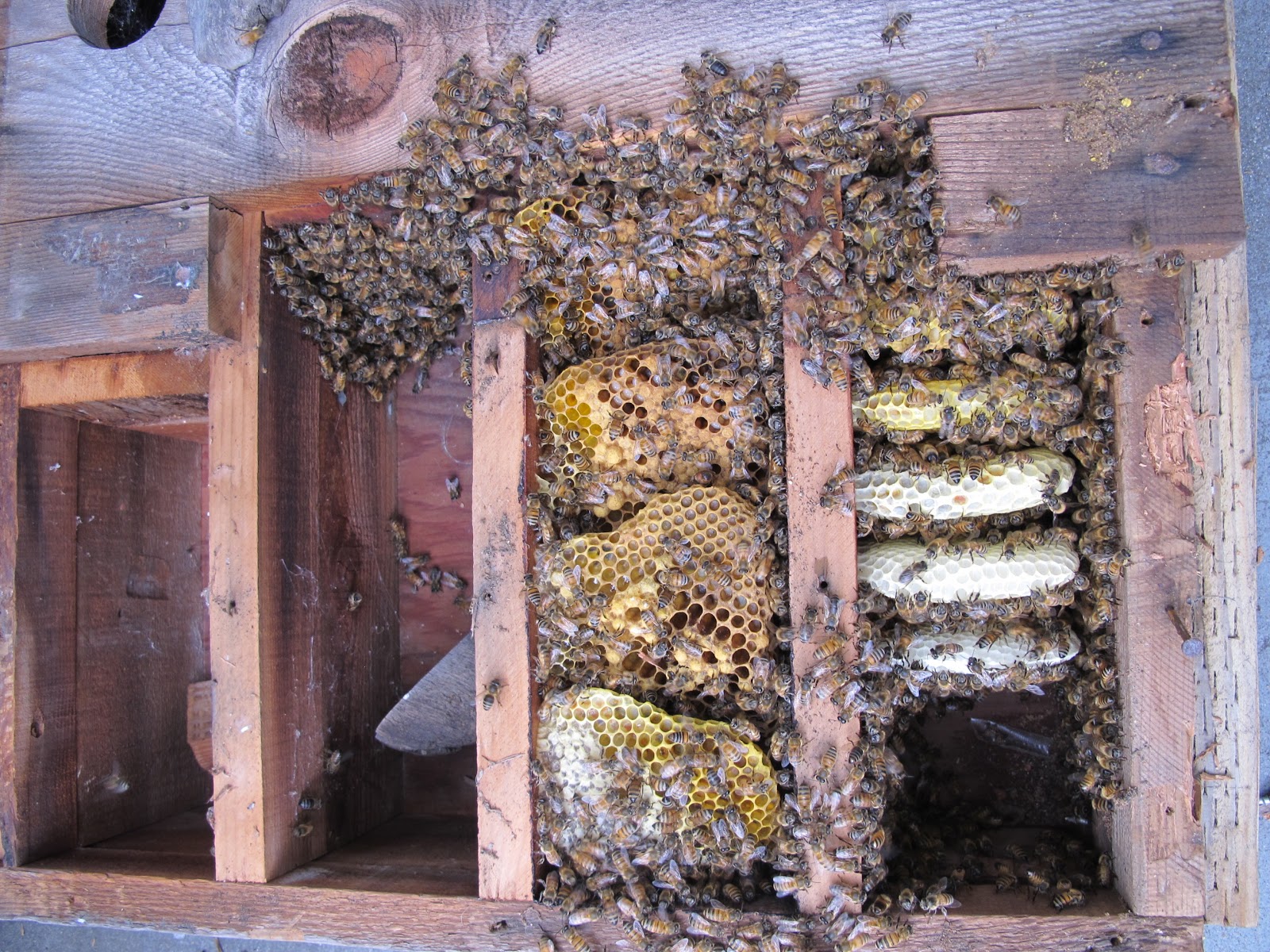

We cut each individual comb out of the bird house and put them in frames with rubber bands to hold them in place. The bees will fix the comb and continue to make more, and when they are done they will remove the rubber bands and place them outside the hive for us to throw away.


By the end we were scooping up bees by the cup full and adding them to the hive box.
Then we put the hive where the bird house hive used to be, and at night when everyone went to sleep, they all crawled inside, and we taped them up and moved them to their new location.
Once at the new site, we put leaves and sticks on their landing pad at the entrance of their hive, so that when they emerged in the morning, they would have to slow down, recognize their location has changed, and then they recalculate their internal gps to fly back to this new location after foraging. So far they are still there and seem to like the change, so we'll see how their growth as a hive continues.

