Showing posts with label pollination. Show all posts

Thursday, July 10, 2014

Flowers & Bees Just Go Together

We moved our beehive recently. They now live on a 30 acre lot, hosted by a family who graciously offered their home to us when we were needing a space to keep them with our recent move.

They sit amongst beautiful flowers and trees, and have a lake to drink from. It's the most bee friendly space I've seen, and I thought we were pretty great to them in our yard. If they weren't spoiled before, they should definitely feel the love now.

The study of bees is an incredible journey. It's so wonderful to be part of something so massively larger than us and to be doing our part to help save the bee populations, and as a by product saving our food source.

It seems like pretty old news that there is a problem with bees vanishing due to pesticides that screw up their gps to make their way back to the hive after foraging, and brings about illnesses for them, as any poisons would for an individual. I think it's also pretty well known by now that about 1/3 of what we eat is a direct result of these pollinators, so if they were to disappear completely, our cycle of food and diets would immensely be changed. In fact, I'll take it a step further and say that if you follow Michael Pollan's guide in his book, "In Defense of Food," where he highly encourages most of one's diet to be fruits and veggies, I'd estimate more than 1/3 of your diet is impressed upon directly due to these little pollinators.

But I'm always in awe when I encounter knowledge of more experienced beeks (as we often call beekeepers in this little community). I had no idea how democratic the hive can be, but learned recently that when a hive is about to swarm, or move locations, they send out a few bees to check on options. Those bees then come back to the hive and share their findings, and then the bees VOTE on where they would like to move. Yes, someone has studied these little bees and their waggle dance to learn down the minute where they are in their voting process and can tell you by their body language and little dances how many minutes until the hive will be relocating and in which direction they will fly off to get there. It's incredible.

We have to save the bees!

Even if you can't have a hive, you can do research on planting some of the bees favorite foraging flowers. Just having a bit of water out and some pollen friendly flowers is a small way you can help this cause. And please, don't use pesticides. 

P.S. Borage is a bee favorite.

Below is a photo of our hive in their new home.
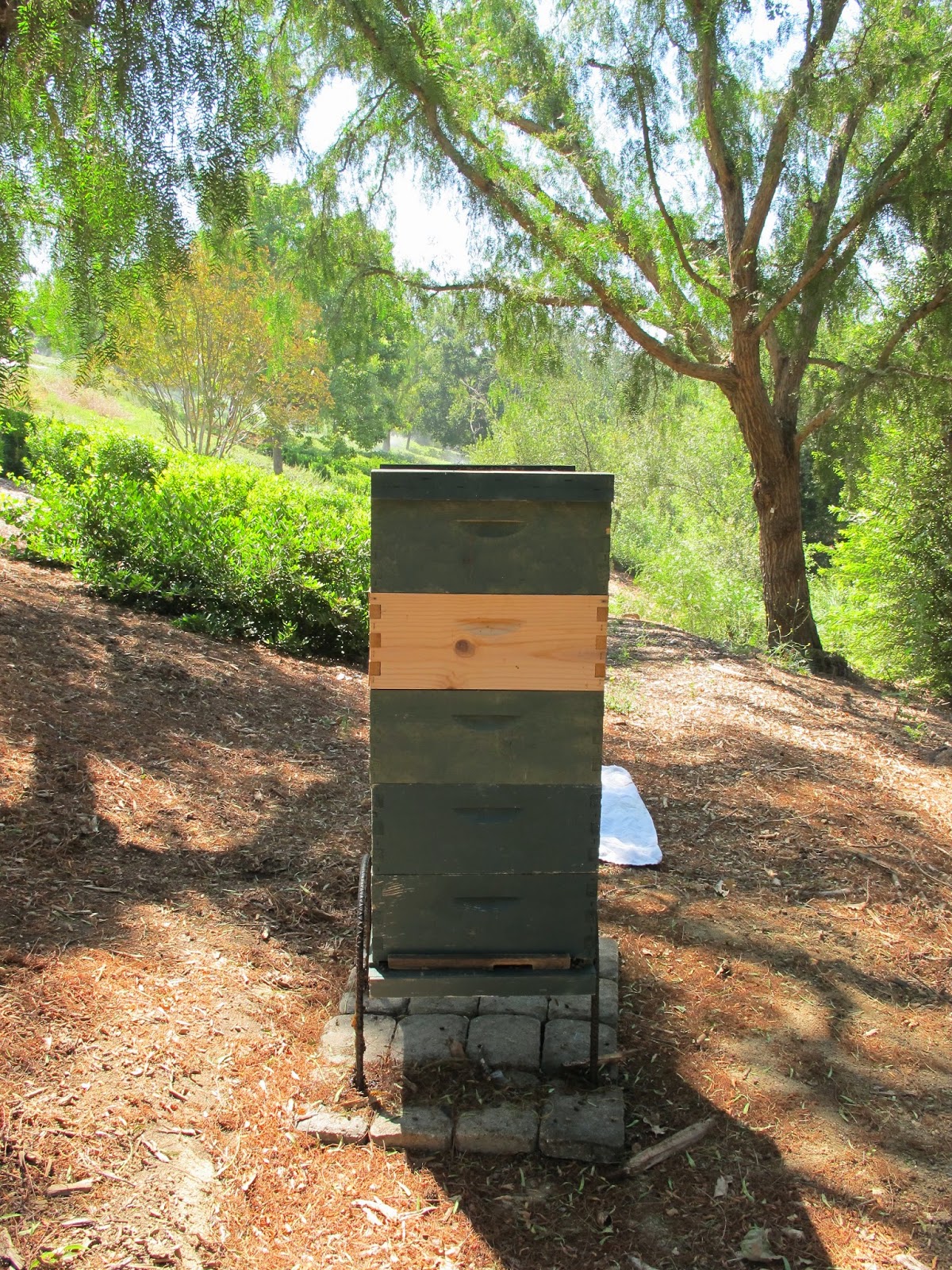

The string of bees to the left is them festooning, which means they are in the process of making comb by stringing wax together.

Our friend Larry helped, and is learning beekeeping by helping observe our hive.

The thing about bees, is making sure they have plenty to forage, and this time of year there are so many beautiful blooms in bounty that I made some flower arrangements for our host family since they are moving into their new house soon. All of these beautiful flowers were hand picked from their garden. Look at those dahlias!


Monday, January 28, 2013

Honeybees Rescued


We've been talking about rescuing a beehive for over a year now. The idea of doing our part to help save the bee colonies that help pollinate our crops sits well with us. And the idea of harvesting our own honey is an added perk. After lots of research and attending bee meetings, we have decided to move forward in our beekeeping experience. We weren't sure when we would get a hive, but knew we'd make it work when the timing was right.

On Christmas morning, we found a young bee hive making it's home in a bird house at the end of our driveway. Our "bees are welcome" vibes must have been sensed, and we have been chosen, so we now have a bee hive and are being thrown into the learning curve of beekeeping.

They were too small to move last month, and there was fear the hive could die if we relocated them too quickly, so we've been waiting for their brood to grow so they can keep warm and adjust to the changes of relocating them to a safer location out of the traffic of people. Any day now we should be moving them, and I'm feeling excited. As you can see from the photo above, they are definitely working hard and growing in number.

Honeybees are incredibly fascinating, and there is a serious misconception of them because of getting stung. They only sting if they feel threatened, but mostly they fly up and out, foraging for food to bring back to feed the young and store for the winter. It is a very self sufficient process, and mostly they want to keep to themselves and do their thing.

The most fascinating thing to me right now is how self reliant they are about everything. Their lifespan is about 6 weeks long, and in that amount of time they will graduate from roles in the hive to perform all the duties before the end of their life. Hives consist of only females. When they need more brood, they make drones by feeding some of the larvae a special mixture of things, and at the end of a longer growth period, they are ready to mate with the queen. When they are done mating, come fall, they are no longer allowed in the hive because they will eat too much food. The guard bees won't let them back in, and if one tries, a group of bees will drag the drone out and push him to the ground. The drones wait outside the hive until winter where they starve and die.

The nurturing side of me feels sad for the drones. I feel like I should leave some flowers out for them in the fall just so they can look like they have purpose and have a dignified death. But they say to let bees do their thing, and they've been functioning like this for years, so I guess it's a system that works for purposes of their productivity, so I'll just observe and try not to intervene.